Synopsis
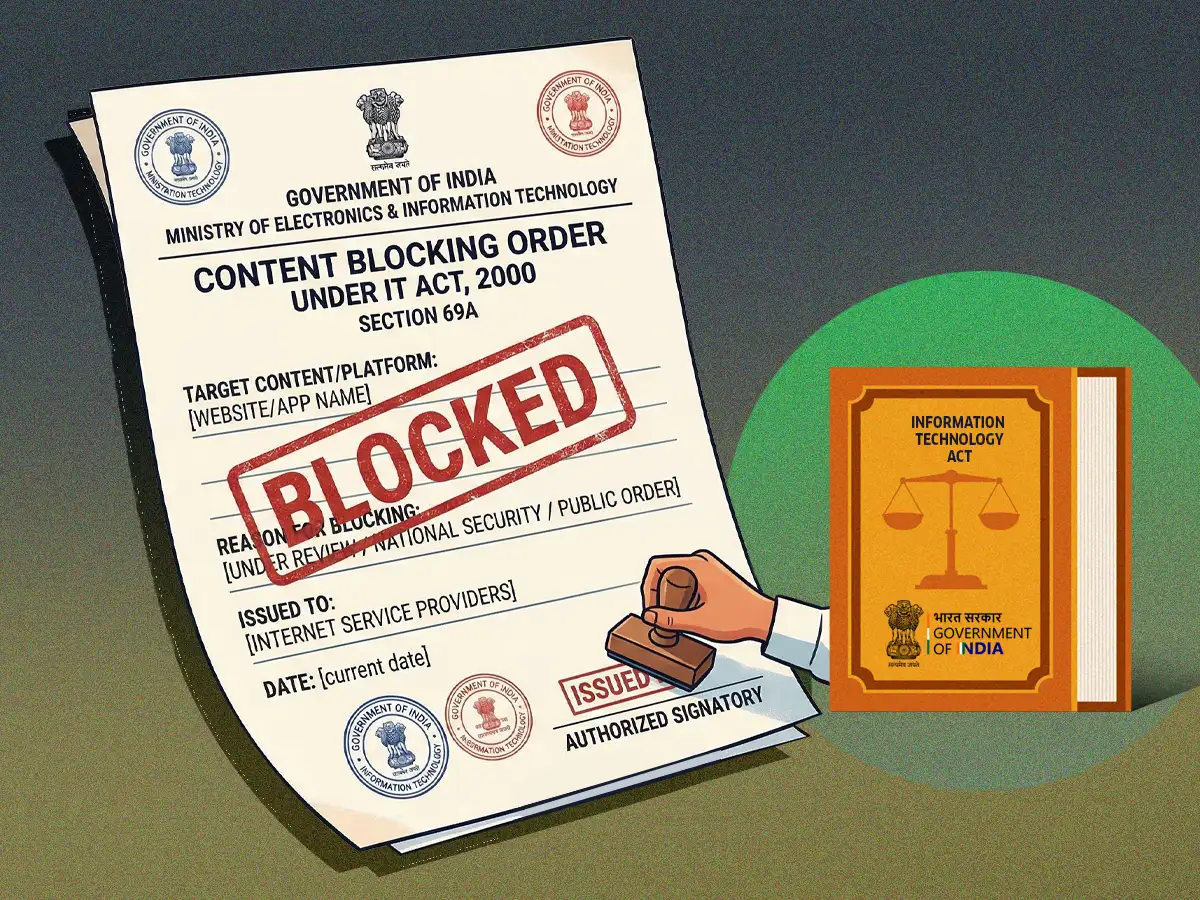
Sources told us that the government could use a gazette notification to give multiple ministries content-blocking powers under the Information Technology Act, 2000, avoiding the need for legal amendments. This would make Secretaries 'nodal officers' with authority to issue orders, expanding Section 69(A) without facing legal hurdles.Listen to this article in summarized format
Sources told ET that this power can be expanded to secretaries of the other relevant ministries through an official gazette notification, without requiring amendment to the IT Act or the rules that are already in place.
The potential notification will designate secretaries at the relevant ministries as nodal officers who can issue the orders, they said.
The Centre is mulling expanding the remit of the IT Act to empower critical ministries such as defence, home affairs, external affairs and information and broadcasting to issue blocking orders to social media platforms under Section 69(A) of the legislation, officials had told ET on Wednesday.
Currently, only the ministry of electronics and information technology (MeitY) has the power to issue takedown notices under this section, with the MeitY secretary being the final authority for issuing such orders.
Under the Information Technology (Procedure and Safeguards for Blocking for Access of Information by Public) Rules, 2009, specific nodal officials at central ministries and state government agencies currently trigger requests to block orders. These are then routed through hearings of examination committees and sent to the designated officer of the rank of joint secretary or above at MeitY. However, in cases of “emergency nature”, the designated officer sends the request directly to the secretary without the committee hearing.
Experts, however, advised caution against expanding takedown powers, and stressed the move could also lead to a surge of requests from multiple ministries, and platforms may struggle to process them efficiently, given that recent amendments to the IT Rules have also reduced content takedown timelines to 2-3 hours in some instances.
“In the past, a provision in the IT Rules had similarly proposed taking down content flagged as misinformation by a government-appointed fact-check unit. However, the Bombay High Court struck down this provision for violating the right to free speech. The court said the government cannot be the arbiter of truth and the right to free speech does not encompass the right to the truth – if this was the case all fiction would be illegal. Thus, the move is constitutionally questionable,” Shweta Venkatesan, fellow at technology policy think tank Esya Centre, said.
Section 69A permits the central government to authorise its officers to issue blocking orders, which suggests there may be flexibility to extend such powers to other ministries through an executive process, said Harsh Walia, partner at Khaitan & Co. “The government’s larger intent appears to be to speed up takedowns and reduce the impact of misinformation. However, this also risks fragmented and inconsistent decision-making across a wide variety of content,” he said.
Officials have cited the need to ensure faster response time to counter misinformation behind the latest move. At interministerial discussions held so far, other ministries have shown interest in exercising independent authority, an official had said. Any such move will also ensure the existing safeguards and mandatory review process for such orders remains in place, he said.
Safeguards to remain
The rules also ensure a comprehensive set of safeguards that include recording in writing the reasons for blocking, a hearing for the intermediary and ideally the content creator, and a final order signed by a designated officer.
Blocking orders under Section 69A are issued to prevent incitement to specific cognizable offenses under sovereignty and security grounds mentioned in Article 19(2) of the Constitution. This empowers the state to impose reasonable restrictions on the freedom of speech and expression. The offences include protecting the sovereignty and integrity of India, ensuring the defence of the country and the security of the state, maintaining friendly relations with foreign states, and keeping public order.
Another route adopted by government agencies to issue blocking orders is under Section 79(3)(b) of the IT Act, under which various ministries can issue blocking orders through the Sahyog portal. Section 79 provides 'safe harbour' protection to online intermediaries acting as neutral hosts, exempting them from liability arising out of third-party content. But under Rule 3(b) of the Section, this exemption is lost if online intermediaries do not remove content despite being legally informed by the government.