Launched in 2014, PhotoSparks is a weekly feature from YourStory, with photographs that celebrate the spirit of creativity and innovation. In the earlier 970 posts, we featured an art festival, cartoon gallery. world music festival, telecom expo, millets fair, climate change expo, wildlife conference, startup festival, Diwali rangoli, and jazz festival.
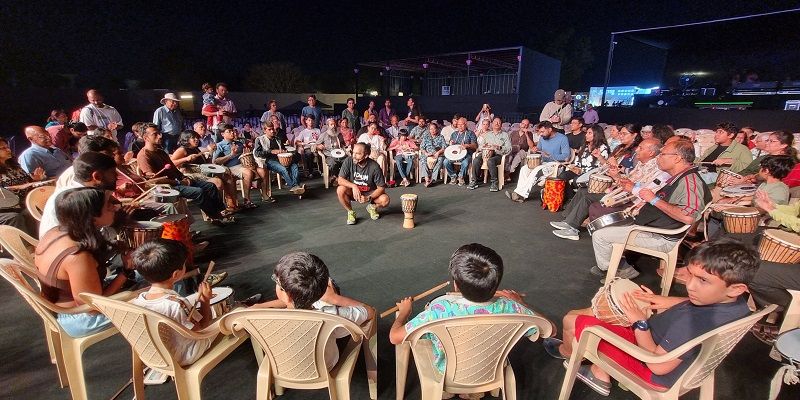
The Serendipity Arts Festival (SAF) recently celebrated its annual multi-disciplinary edition in Goa (see our coverage of the festivals from 2019 onwards here). In this photo essay, we showcase more artworks from multiple SAF venues in the city, such as Old GMC Complex, Azad Maidan, Art Park, and Directorate of Accounts.
The festival team is gearing up for a wider and more international edition in 2026. “SAF 2025 was a particularly meaningful milestone for us as it marked the 10th edition of the festival and also our largest edition to date,” Hero Group’s Sunil Kant Munjal, Founder-Patron of Serendipity Arts, tells YourStory.
“Looking back, the overall response was truly overwhelming. The feedback we received, from artists, audiences, partners, and institutional stakeholders, reflected a deep appreciation for the scale, ambition and maturity the festival has developed over the last decade,” he adds.
The curatorial depth, diversity and openness were highly commended, and more engagements are planned across India and overseas this year. “We reinforce our commitment to working as a year-round cultural institution,” says Munjal.
“The calendar of events for 2026 includes residencies, exhibitions, city-based activations, and international collaborations. Running parallel to these are our grants and outreach initiatives across disciplines, which allow us to support artists and cultural practitioners beyond the festival moment,” he explains.
The festival team is powered by an outstanding team of curators, including Aneesh Pradhan (music), Anjana Somany (crafts) and Manu Chandra (cuisine). The curators share some of their insights, experiences and recommendations for the creative community.
“The craft scene in India today has become vibrant and visible. Its true potential will be realised if we are able to illustrate that craft goes beyond being simply a product,” Somany says.
It is important to be able to engage the youth-torch bearers of tradition. “Only then will we be able to ensure continuity of this unique soft power of our country,” she adds.
Somany has over three decades of engagement in the craft world. “My nomadic life of having lived in multiple regions has enriched me. I research and do active documentation, and am working on a craft-related publication,” she describes.
“Artisans could do with more support to realise their true potential. Design and adaption to contemporary needs is a key requirement here. The pandemic has also shown the importance of embracing technology for connectivity as well as for co-creation as a value add,” Somany explains.
Culinary craft curator Manu Chandra runs brands such as Lupa and Single Thread. He is also engaged with Begum Victoria Cheese and Chhota Hazri Spirits for Baagh Gin.
“India’s culinary scene today is being shaped by confidence and clarity. There is a clear shift toward ingredient-focused cooking, regional specificity, and menus that tell stories rather than trying to do everything at once while chefs continue to grow as entrepreneurs,” he observes.
Diners are also more informed and well-travelled. “They increasingly value transparency, from sourcing and technique to how spaces are run. We are also seeing strong growth in casual-yet-serious dining, where quality and intent matter more than formality,” he adds.
As tips for aspiring food entrepreneurs, he recommends upskilling and expanding knowledge beyond core competencies. “Grab opportunities wisely. Importantly, build yourself a rapport with a mentor who can guide your next step,” Chandra suggests.
To scale the cultural entrepreneurship movement in the country, the Hero Group has launched the Brij Incubator. “Initiatives for startups should not focus only on areas like health tech, fin tech, or ag tech. The arts, crafts and our culture are actually foundational,” Munjal affirms.
“Art and culture are basic to all of us. The incubator’s primary role will be to support startups based on arts, crafts and culture,” he adds.
Some of the supported entrepreneurs exhibited in the Art Park at SAF. “We want to help artisans, artists and crafts people develop into full-time professionals. We want to ensure that their families can not only survive on it, but thrive on it and have a quality of life which is comfortable for all,” he says.
Munjal invites more members of the arts ecosystem to engage with Serendipity Arts through its residencies, grants, research initiatives, open calls, and public programmes. “We encourage them to approach us with ideas that are grounded in shared values and a willingness to work collaboratively. Some of our most meaningful initiatives have emerged through conversation and sustained engagement over time,” he recalls.
Looking ahead, what feels most important is continuity and care. “Artists, cultural knowledge, and infrastructure need investment with patience and responsibility,” he recommends.
“As Serendipity Arts grows, both within India and internationally, our focus remains on creating spaces where artistic practice can thrive, critical conversations can take place, and culture remains central to how we imagine our collective future,” Munjal signs off.
Now what have you done today to pause in your busy schedule and harness your creative side for a better world?
(All photographs taken by Madanmohan Rao on location at SAF 2025.)